
Native Plants for Los Angeles Gardens: A Waterwise Home for Pollinators
Native plants for Los Angeles gardens can make a yard more interesting, support bees, butterflies and hummingbirds, and reduce irrigation needs once the plants are established. The best results come from matching each plant to the site’s sun, soil and space, then giving new plantings the water they need to take root.
I love the moment when a garden feels like it belongs to its house. A shaded front yard in Hancock Park, a narrow side yard in Miracle Mile and a sunny courtyard near Fairfax call for different designs. None needs to be a sheet of gravel with three lonely succulents. A thoughtful native garden can have structure, seasonal color and movement—and still let the architecture be the star.
Why native plants for Los Angeles gardens make sense
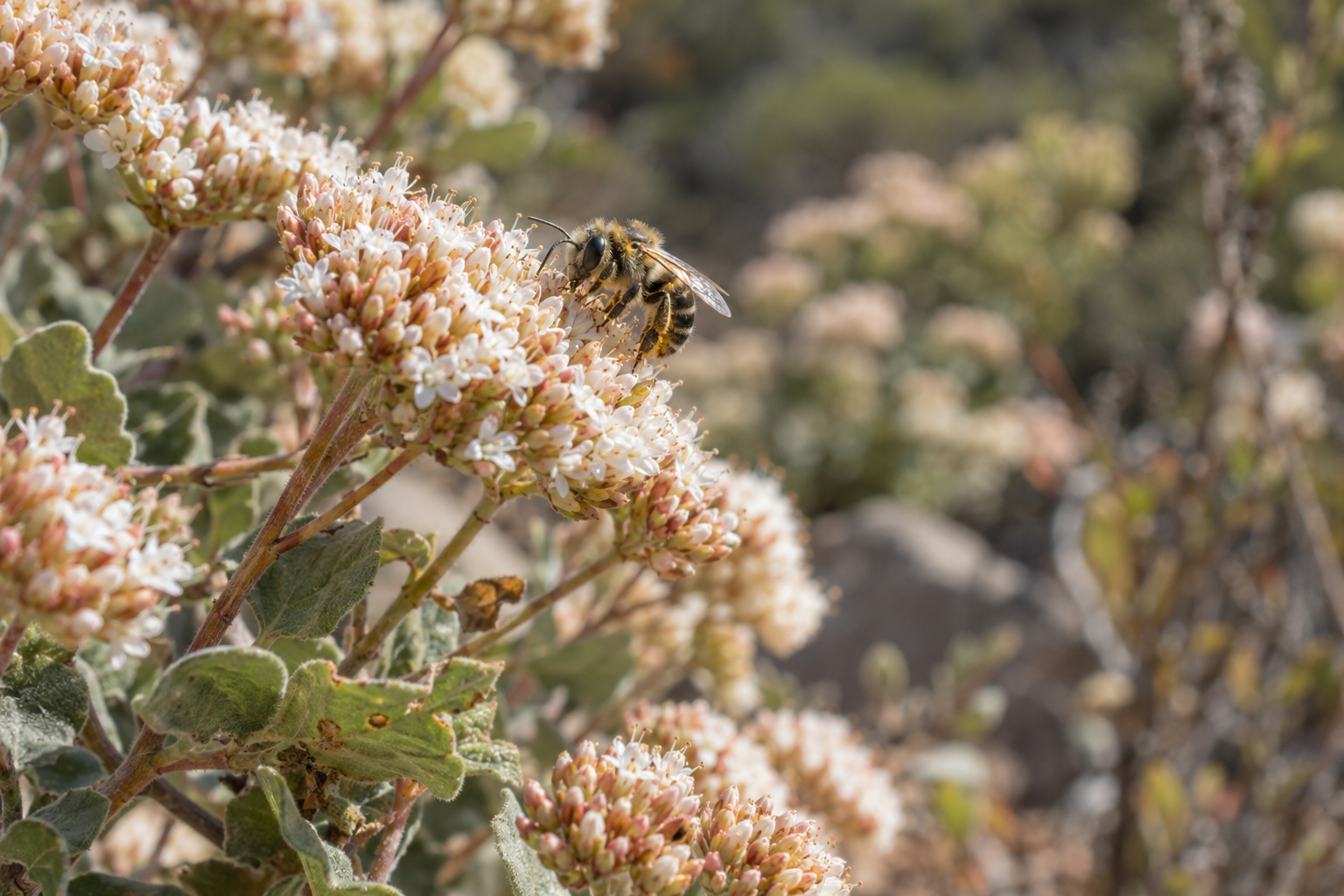
California native plants have relationships with local wildlife that go beyond a flower looking pretty. Nectar and pollen feed visiting insects and birds; some plants also provide food for caterpillars and other wildlife. Theodore Payne Foundation’s pollinator plant guide is a useful starting point for choosing species with a purpose.
“Native” is not a synonym for “never water.” A new plant needs regular attention while roots establish, and its eventual water needs depend on the species and the conditions in that particular yard. Theodore Payne’s planting guidance recommends checking moisture in the root zone and watering deeply when needed rather than giving every native plant the same frequent, shallow spray.
Which California natives help pollinators?
For a sunny bed, I would start with a small, repeating palette instead of buying one of everything:
-
California buckwheat (Eriogonum fasciculatum) offers summer flowers and a nectar source for butterflies. Allow room for its mature spread. Plant profile.
-
Cleveland sage (Salvia clevelandii) brings fragrant foliage and purple spring-to-summer flowers; its size makes it better suited to an open bed than a tight strip beside a walk. Plant profile.
-
California fuchsia (Epilobium canum) adds late-summer and fall red blooms that attract hummingbirds. It spreads, so plan for maintenance or give it space. Plant profile.
The right mix depends on exposure and drainage. A shaded bed beneath a mature tree needs its own plant list; don’t assume the sunny palette above will thrive there. Choose several species with overlapping but different flowering periods, and leave some habitat instead of cutting every spent stem to the ground at once.
Waterwise landscaping in Los Angeles starts with the layout
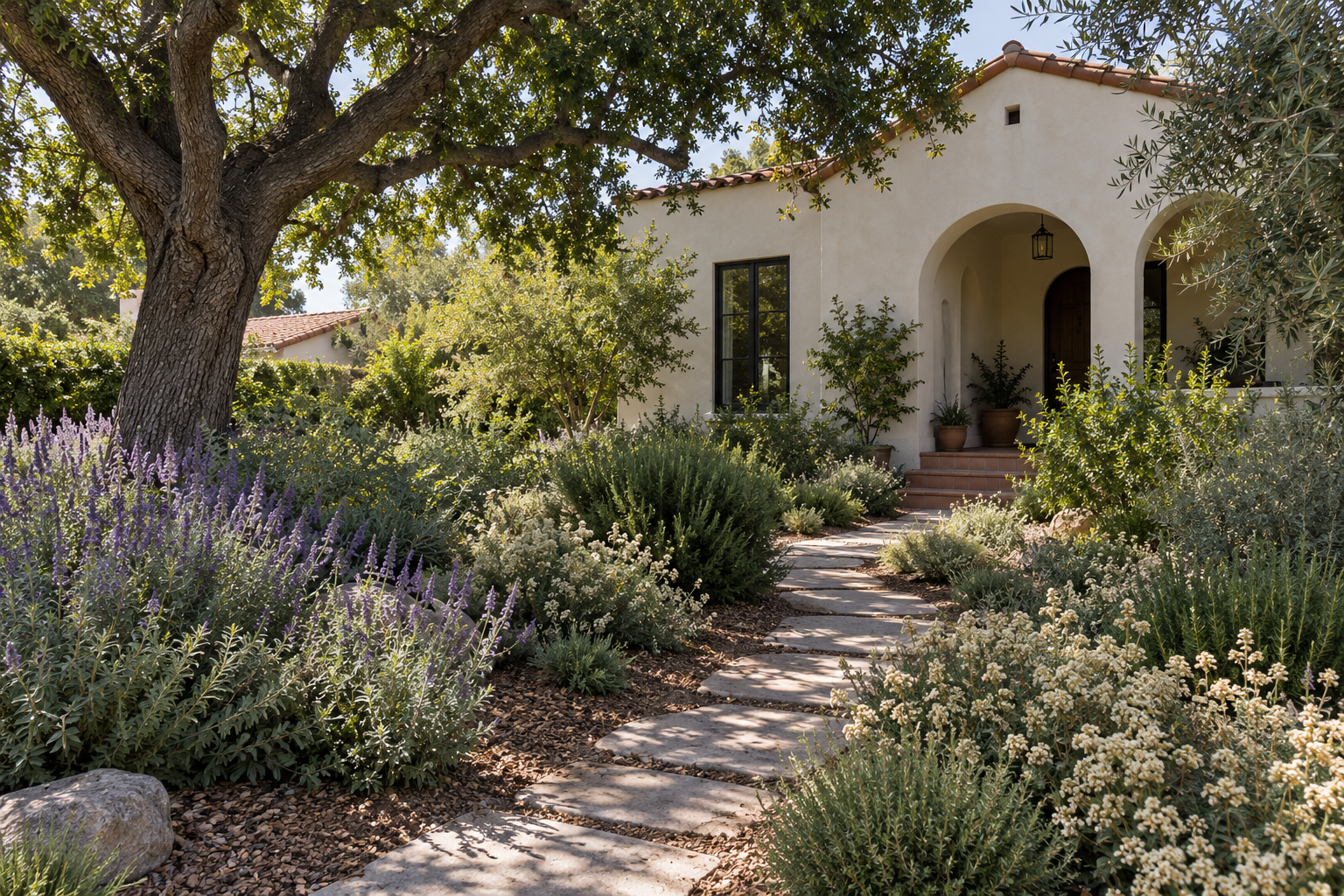
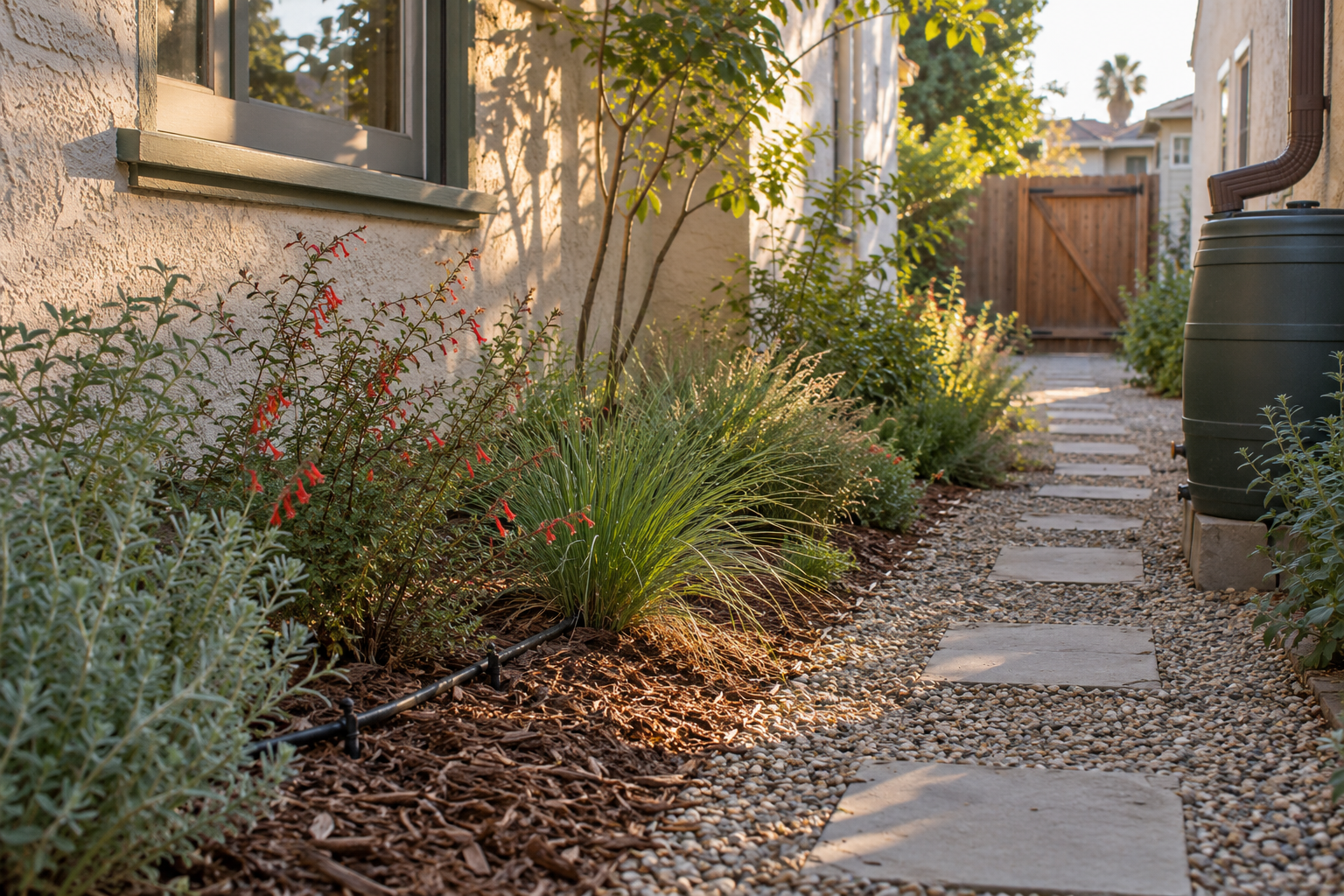
Begin with how you use the yard. Keep a path wide and clear, leave sightlines to the entry, and group plants with similar water needs on the same irrigation zone. Check existing sprinklers for overspray. Mulch can help retain moisture, while drip irrigation can target planted areas rather than the sidewalk. Then adjust watering as the plants establish and the seasons change. The LADWP landscape efficiency program offers another place to start planning water use.
In Hancock Park, a planted border can frame a Spanish or Tudor Revival home and preserve its mature trees and original walk. The City’s Hancock Park Preservation Plan addresses historic landscape features and street views; it treats ordinary landscaping differently from work involving contributing features, the public right of way or visible hardscape. Check the property’s status and proposed scope before changing a historic front yard.
A compact courtyard in the Fairfax District or a side yard in Miracle Mile can take the same principles at a smaller scale: one or two appropriately sized flowering shrubs, a clear route through the space and irrigation tailored to the plants. If a sale is on the horizon, a tidy, legible garden helps buyers understand the outdoor space without having to imagine how to maintain an overgrown planting.
Could a lawn conversion qualify for a rebate?
Possibly. LADWP’s turf replacement program describes incentives for eligible projects that replace existing turf with a qualifying sustainable landscape. Rules, funding, service-area eligibility and the application sequence can change, so read the current requirements and obtain any required approval before removing the lawn. A rebate should shape the budget only after eligibility is confirmed.
A good first step for a Los Angeles native garden
Photograph the yard in morning and afternoon light, measure the beds, and note trees, slopes, sprinklers and places where water pools. Then take that information to a California native plant nursery or a landscape designer familiar with local conditions. For native plants for Los Angeles gardens, the most satisfying plan is one that fits the house, gives pollinators something useful, and remains manageable for the person who lives there.
If you’re preparing a home for sale, The Bienstock Group’s preparation guidance is a place to start thinking through which outdoor improvements will show the property at its best without making assumptions about a return on landscaping costs.
Frequently asked questions
Do native plants need irrigation?
Yes, especially when newly planted. Established plants have different water needs by species and site; check the soil and adjust irrigation rather than assuming every native garden can be turned off completely.
Can I make a pollinator garden in a small yard?
Yes. A few well-chosen plants with staggered bloom times can make a useful planting in a side yard or courtyard. Select for mature size, sun and soil first.
Must I remove all my lawn?
No. You can replace a portion that is difficult to use or irrigate while keeping lawn where it has a real purpose. If seeking a rebate, confirm its minimum area and other requirements before starting.
Will native landscaping increase my home’s value?
There is no reliable universal dollar amount. Design quality, condition, water use and buyer preferences vary. A healthy, maintained landscape that complements the architecture is a sound presentation goal; an appraisal or sale result is property specific.
About The Bienstock Group:
The Bienstock Group, led by Sheri Bienstock, is an expert real estate group in Los Angeles, Hancock Park, and Miracle Mile. Sheri is committed to her clients and will invest all her effort to get you the best results possible. Sheri has 235+ five-star reviews on Zillow, and has been ranked #1 listing agent in 90036 since 2009 and in Hancock Park since 2016.
